Tuesday, August 4, 2015

Top Ten Harry Ruth Moments of all Time

I'm back on the grid.

With the Spooks I mean. It happened gradually and begrudgingly, but Harry and Ruth have stolen back my heart. I'm not even quite sure how I let them in.  But 'in' they are.  


Have you ever fallen in love with something odd?  I mean, ... I have. I've fallen in love mostly I guess with living male humans that I know personally,  . . . but when you stop to think of it, I'm not really limited to that.  I've fallen head over heels for, well. . . books. . . long-dead movie actors . . . even buildings. So maybe it shouldn't be all that surprising that I now appear to be in love with a fictional television couple.  

So much so, that I have been willing to re-watch all the "Harry and Ruth"-centric episodes of the show I thought I would stay mad at forever. Don't get me wrong, I am still quite angry at MI-5 (Spooks) and how it squandered its many gifts in its final seasons. In particular, how it took an incredibly compelling gem of a storyline that was handed to them on a platter by the charismatic charm of two amazing actors, and sucked the spark right out of it.  I am still disturbed with the creative team's unsatisfying vision for how to do passion.  In fact, the more I think about it -- and as well as they did violence -- Spooks visionaries had a major disability when it came to the ways of the heart.  I can think of very few even marginally satisfying romances over the run of that show hmmm . . . I think I feel a future post coming on. But in the meantime...

the point of this post is not to bitch,  but rather . . . to love.  

And though their romance may have been ultimately punishing to the viewer because it took place on an intense spy drama, there are still so many high points to cherish. 

So in that light, I present to you the Top Ten Harry Pearce and Ruth Evershed moments of all time: Scenes from the pairing that deserve an adoring airing. 

[The clips here are all, obviously, not my own, but the property of the BBC and Spooks, for whose indulgence I would be grateful, as I extracted them for personal and illustrative purposes only and no commercial intent.] Oh, yes, and I suppose, just as obviously, watching these clips and reading my comments will SPOIL your viewing of this show. Please stop here if you don't want SPOILERS!


10. "I'm fine." What a perfect description of personality this scene provides. You get Ruth's classic sarcasm along with her humanitarian moral understanding. She is PERFECT here and Harry almost mute, powerless to help or explain, but just standing there in rumpled clothes in which he has probably stayed, by her bedside all night. He can only listen to and love her.  9.7


9.  "You have to give a man a chance, Ruth." And here is Harry's counter point. His personality - headstrong, powerful, vulnerable and in love - is on full display and his deeper meaning is bitingly clear in this plea for her understanding. 9.3


8. "I'm trying, with all my limitations" Their reunion moment that cuts to the heart. Unlike the episode that aired just prior to this one, where they have re-met after time apart, but under horrific circumstances that have left them hardly able to speak to each other, here they attempt it. It doesn't go well. Oddly, I love that. I love Ruth's bite and bitter sadness and Harry's abject inability to be or do anything she needs. Heart wrenching.  8.2


7. "Hotel music." OK, this one is just plain sexy. I can't watch it without wondering what the hell she is thinking walking away from this man? Harry is extremely appealing here, but she won't have any of that.  A frustrating moment . . .  for both of them, as she makes clear later in the episode when she almost calls him as he sits drinking alone.  5.4


6. "Bus Scene." A beautifully filmed moment that is so warm and inviting. They get to act like people here away from the office and (somewhat) away from work. In the episode from which this comes, Harry has been temporarily removed from his position and the team is closing ranks to clear him. We see Ruth as someone who would be very amenable to any overture he might make. But he is too stupid to pursue it now; and Ruth is so beautiful in this light, it's hard to imagine what's keeping him from seeing it. . . . leaving the viewer to wonder exactly what he "regrets" having not done.  4.9


5. "The proposal." I love the proposal, though Ruth does not. Just like the hotel scene, #7, above, Harry in hot pursuit is something she must have a mind of steel to resist. I could not. He gets deep into her personal space, breathing her in and whispering "marry me".  Her excuse is hard to fathom and in some ways this marks the start of the series' writers' departure from a relationship that could have made sense, but I still love and treasure this moment of intense desire on the part of Harry and only wish the writes had had enough sense to let her say 'yes' . . . . or at least to let her sleep with him as consolation ;)  9.1


4. Some may find it odd that I count such a moment among their best, but I find it powerful and telling. This scene takes place in the episode after the famous 'bus scene' in which Ruth has clearly hoped for a bit more personal contact from Harry than he is able to give. It excels by way of explanation. He is passionate. He does want her (as is obvious from the way he pushes her to the wall and gets in her face) but Harry lives in a perpetual state of self-denial. This may be their most carnal moment. And I dig it. Episode 4.10


3. "Would you like to have dinner?" When Harry first makes a romantic overture to Ruth, he does it in quintessential Harry style with weird timing, bravado mixed with self-effacing charm and an appeal to her superior information. This scene showcases their mutual attraction, nerves and excitement. Its charming from start to finish -- especially his face as she walks away -- and  better than the actual dinner that follows. Episode 5.3


2. "You can tell Adam." I LOVE this scene which includes not just the lovestruck dazed gaze of our completely absorbed leads, but some of the best dialog and delivery in any Spooks episode. Beyond endearing and absolutely sexy. Episode 5.5


1. "The Kiss." Need I say more. This moment is not just Harry and Ruth gold, it is Spooks gold, having made it onto the "top 10 Spooks moments" countdown voted on by cast and crew, according to dvd special features for season 10. Special indeed. This goodbye captures their love and their passion, their spirits and their story almost perfectly. It is beautiful, sexy and heartbreaking. (In a good way...unlike other moments I have no interest in including in my list.) Episode 5.5


If you don't agree with my choices, pipe up! I'd love to hear what you would add to the list. I myself have another dozen or so clips I'd have loved to include, but just as in Spooks, hard choices are necessary and we don't always get what we want.  To get more of what you want though, you might check out my exhaustive list of all the special Harry & Ruth Episodes.

Friday, July 10, 2015

One to Ponder: Picard or Pearce?

I know I would like to make it so . . . And I'd be interested in hearing from anyone else on this matter. For romantic purposes, who would you pick: Jean-Luc Picard or Harry Pearce? I have been pondering this one all day and have been pleasantly, ahem, engaged.


          Here's the easy part. Both of em. Yum.


To fully appreciate the dilemma maybe you have to be someone who admires 50-something men. As I fit square in the center of that group, I am up to the challenge.  For the uninitiated reader, let me just briefly state that Picard, played by Patrick Stewart, is captain on the flagship of the futuristic planetary federation's space fleet in Star Trek The Next Generation which aired on American TV from 1987 through 1994.

[And because there are so many people who are (extremely) so, I always feel compelled to announce that I am not a "real" trekkie and you simply must not hold me accountable for my failings to properly appreciate and index all the dimensions of that universe. What I will lay claim to is being a deep appreciator of Captain Picard. And who that knew him wouldn't be?]

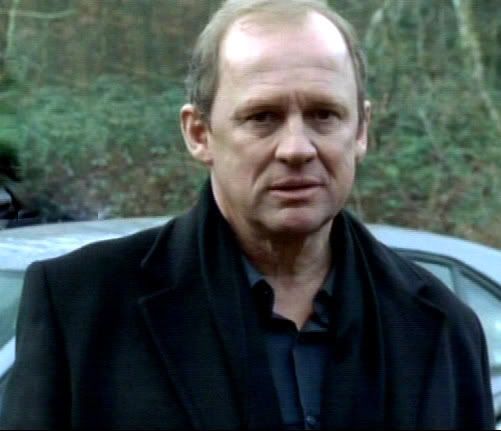
Anyway. . . to continue with the background . . . on the other side of the ring is Pearce, played by Peter Firth, the fictional head of British Security Services in the powerful television program Spooks from 2002 through 2011, (as well as in a recent feature film based on the series. Oh yes, I guess, then, that I should also mention that Picard was a film character as well. . .  bla bla bla.)

The point is: both characters are extremely sexy, and neither got nearly enough of the opportunity for romantic encounter that they deserved in their shows. . . . One must use imagination to fully develop ideas about a romantic partnering with either of these men . . . .


Oh, excuse me. You're still here?  Well, yes, um, lets get back to it.

I guess we can start with the things Picard and Pearce have in common, beyond that they both start with 'P'. Both are played by men of roughly the same age (at the time of their respective series'). While Stewart, born in 1940, may be currently approaching old age, Captain Picard will be forever preserved at the height of his sex appeal and charm as fit, bald and 50-something, a powerful and intellectual captain. Meanwhile Firth, a dozen years younger than Stewart in real life, is likewise ensconced in our hearts as 50ish Harry Pearce at the peak of his pouty, intense, and slightly rogue powers.

Both men are extraordinary leaders -- men who make you feel safe despite outrageous danger. On the down side, both are fundamentally married to their jobs. Which probably explains why neither got to have enough love affairs, although both did get to dabble in an almost-romance with a deeply appreciated and cared-for coworker; in each case, they remain single and alone -- probably in better position to do the difficult work the world needs done. And speaking of that: both tend to be a magnet for evil dudes and kidnappers (think Borg; think Russian spies) who want to change the way of the world our heroes are seeking to preserve. Both leaders are intense and enigmatic. Both have b-e-a-u-t-i-f-u-l voices and both are played by amazingly talented British actors.

Wait. Isn't it time for another picture or two?


These men are high up in their respective worlds, brushing shoulders with the biggest decision-makers and political leaders in their spheres, but, still able to (more or less) act on their own, with independent judgement, in most of their everyday encounters. Both lead teams of highly talented people whose respect they get to enjoy at an instant and deep level. And part of what makes them so appealing is that incredible authority they wield so well, handling stress and calling the shots with total facility and masculinity.

In fact, both are honestly most appealing when they are just a bit ticked off, raising their voices, barking orders and scowling - which (luckily) they do quite often! and which only makes it that much sexier when they do find an opportunity to relax, smile or speak softly, as they (luckier still) sometimes do when flirting with their attractive favorite co-worker, who, interestingly enough, and sensibly enough, in each case, is a woman who is somewhat outside the rank and file officer norm, women of their own unique position and power.


But which would I choose? Thats the point here and that is certainly the hard part.


For looks, I'd have to give the nod to Picard who is perhaps the more conventionally 'hot' guy. He is certainly more fit - and has more classically handsome movie star features.  It would be easy to spend time looking at him.  But, to give Pearce his due, I'd say that he has such an open warmth about his face and such an amazing mouth, that I'd just as eagerly gaze at him for a few dozen years.

And actually, I think that this is what this decision would come down to.  In a word, I see Picard as sharper/colder man (yes, I know that is two words) and Pearce as a warmer and more open temperament.  I choose Harry.

Further, I see Harry as a bit more of a renegade, doing what he wants and not always following rules and protocols. This is more exciting than a stricter/military hierarchy that the Captain almost always adheres to and demands.  And for icing on the cake, it also seems that Pearce is more over-the-top in love with Ruth than Picard ever was with Beverly, or any other woman. I see this as a good sign -- of someone who is capable of truly giving his heart, soul and body to a woman - even though he may not choose to do it or live in a world where he was ever allowed to.  And maybe, lastly, the 'reality' of the backdrop is a little more stark in our everyday world of real threats found in Spooks, than it is in a high fantasy world set hundreds of years in the future and in space to boot.

Not that this game needs to have any reality about it! but sometimes a fantasy that feels more 'possible' is a fantasy that feels more worthwhile.

So I choose Harry Pearce and though the decision may have little impact on the fate of the free world or the flow of space, (nor even the power to effect my continued enjoyment in re-watching The Next Generation), I do have to say that is feels worthwhile to have this issue resolved for good.

Thursday, November 27, 2014

A Triple Shot of Persuasion

Having recently watched and compared all three adaptations of Jane Austen's Persuasion -- 2007 BBC TV Movie, 1995 feature film and 1971 miniseries -- I decided it would be an excellent plan to go role-by-role and pick the best performances in each. I did this a few years ago with Emma and had a lot of fun, so why not!

Although I grudgingly picked the 1995 version as my 'favorite' adaptation overall, all three were a bit disappointing and failed to deliver the truly satisfying experience that an excellent adaptation can supply. While 1995 has the overall best mix of a reasonably true and accurate plot, alongside a very dashing Captain Wentworth and a smooth flowing well-executed feel -- the others aren't far behind. All three have some significant strengths, but some significant weaknesses as well. However, exceptionally fine performances are found in all. So, I'm wondering, how will the points come out and which adaptation will come out on top if I grade the actors? Lets see!  By the way, my grades are obviously based on my own subjective enjoyment of the performances and are heavily biased toward what I feel is "true" to the characters as Austen wrote them.

Anne Elliot:

1) Sally Hawkins (2007). I love her spunky charm and deep internal life. Because the adaptation she acts in is the most distant from the book, Hawkins does not have the opportunity to really inhabit the Anne Elliot of the book as the others do. However, I think she still comes closest to the essence of what makes Anne admirable - likable, trustworthy, solid, but still engaging, and full of a rich deeper inner life -- more so than those around her have much inkling of. Austen describes Anne as having an "elegance of mind and sweetness of temper" and I think Hawkins come closest to projecting these qualities. I can almost see her thinking things to herself with a quiet amusement. In her eyes there is a spark. The viewer -- just like the characters around Anne -- can either miss it and miss out on a lot, or catch it and be rewarded.  A

2) Amanda Root (1995). Though she is clearly an excellent actress, Root, and the production she acts in, have a take on Anne that feels a bit too timid and mousy for my taste. I greatly appreciate Root's emotive skill and think that she has created an inspiring and memorable persona; I just don't think that persona makes the best Anne Elliot. Amanda Root would have played an excellent Fanny Price (Mansfield Park) had she been given that chance instead. I do find her earnestness and quietness engaging, but I want Anne to be a character of lovelier inner poise and command. Amanda Root makes Anne frumpy, though she stirs with this performance anyway.  A-

3) Ann Firbank (1971). Maybe partly because of the earlier era and partly due to Firbank's more demure look, she nails the part in one way that the others do not: she projects the elegant qualities of a once lovely woman of high class; she speaks in a very refined and quiet way and gives an appropriate aura of subtle, though diminished, grace. However, she is a bit too stayed and settled for my taste. She never quite gets a lighter and cheerful inner depth that I believe Anne Elliot possesses. The actress is about a decade older than Anne is in the book, and that may push the edge of an appropriate age. By the end of the film Anne should be appreciably more attractive and appealing -- not just physically, but charismatically, but Firbank just never quite gets there, though she does perk up a bit. Overall this is a rather dull take on the role. B+

A note on the look of Anne: Somehow none of these actresses 'look' like Anne to me. Austen describes her heroine as having "delicate features and mild dark eyes" and notes that she had been a "very pretty girl" but is now "faded and thin" and "haggard." Later on, when noticed at Lyme by Mr. Elliot, Austen tells us that Anne has "very regular, very pretty features" and is looking remarkably well due to the bloom and freshness of youth having been restored by the sea air and the trip having animated her. Yet both modern (1995/2007) Anne Elliots have a more earthy look and neither are 'haggard' in the beginning nor delicate, really. The 1971 version gives us a very elegant and classic beauty in the lead role, thin and lanky with strong features, but she never seems to attain that freshness of youth. All three versions admirably liven Anne up as the production goes on; in particular, the 1995 version does an excellent job of very subtly beautifying Anne so that by the end she is much more attractive than she was in the beginning. Unfortunately, they never really get her to a place of striking beauty. I'm not sure exactly what I have for Anne in my mind, but I know these three actresses aren't quite it.

Captain Wentworth

1) Ciaran Hinds (1995). Some people complain that Ciaran Hinds doesn't look they way they expect Wentworth to look. I suppose they are right. Oddly, while the 'look' of Anne Elliot mattered very much to me, the look of Wentworth is a non-issue. Hinds is certainly a bit too old for Amanda Root (10 years her senior, when they should have been contemporaries); but, I can forgive it. I like that this Wentworth is not gorgeous. His appeal comes from his strong and direct manner, his forceful voice and his dramatic presence. His status as a leader -- one who has been around a bit and knows what's what -- is evident. Hinds is a charismatic and sexy Wentworth who conveys the strength and vulnerability of this character. A

2) Rupert Penry-Jones (2007) is the handsomest of the Wentworths and looks the most age-appropriate (though he is actually a bit older than Bryan Marshall was in 1971). You get the full sense of what a great catch this man would have been when Penry-Jones plays him! He is also somewhat intense, and it's great that the production he is in allows him to express and convey deep desire for Anne, along with a smoldering gallant style. I really don't have too much negative to say about him other than that he falls a bit short of the mark set by Ciaran Hinds in exuding the full range of presence and strength of the character. A-


3) Bryan Marshall (1971). I hate that I am troubled by things like Ann Firbank's fluffy '70s updo or Brian Marshall's thick sideburns and helmet hair. But I'd be lying if I said I wasn't. It is odd and unfortunate that the look of both our leads in the 1971 production is so heavily a function of their own time as to be distracting when other more minor characters in that production look fairly timeless. In any case, Marshall is good but it may take the modern viewer a bit of time to get used to his style, or to ever come round to finding him sexy. Aside from his appearance, he plays the least engaging or dynamic leading man of the three. However, he does project a warm and appealing Captain Wentworth overall and, by the end of the production, is quite attractive and so very in love with Anne as to be really sympathetic. B+


Sir Walter Elliot

1. Anthony Head (2007).  We are told by Jane Austen that vanity is the beginning and end of Sir Walter. He had been remarkably handsome in his youth and still a very fine man at the age of 54. Sir Walter cares very much for his station in life and for the appearance of his dignity and his fine person. For all of these reasons he is absurd, but not hilarious. Of all the Sir Walters, my favorite is Anthony Head. I would watch the 2007 version again simply to sample his performance one more time; it took time to switch gears to Anthony Head's take on the role, but once I did, I was absolutely hooked. For starters he is a physically perfect choice; he almost certainly was an extremely handsome younger man and now looks dignified and still quite attractive. Head gets the little-ness and irritability of Sir Walter just right and allows Sir Walter to lighten up considerably once in Bath and away from the pesky financial troubles that plagued him before. A+


2. Corin Redgrave (1995) gives a very fun performance here as Sir Walter. Yet, all in all, he is a bit too flamboyant, fussy and over-the-top for my taste. He also comes across as somewhat whiney and attention-seeking, which I just don't see as an attribute of the character Austen created. Redgrave's take may diverge from Austen's, but he does creates a very distinct impression and really eats up the scenery when he's on camera. He does this with his performance as well as his costumes -- which are beyond extreme. I mean, I can't help but admire all of this, but the production's take on Sir Walter is a bit too comic to get the top spot. A-

3. Basil Dignam (1971). Is a good actor; I don't know much about him, but I get the impression of a typical, strong-quality, BBC character actor. I find him a bit too old (at age 65ish) for the character, and also too average looking to really stand out as the absurdly vain and attractive Sir Walter. That said, I still like the solid, even style Dignam gives to Sir Walter, with his fussy and self-absorbed ways. There is some tough competition in this field and Dignam just can't quite stand up with the others. B


Lady Russell

What an odd bunch of Lady Russells! ... from kindly friend, to ice-queen, to total doormat, we cover all interpretations of the role.

1. Susan Fleetwood (1995). Lady Russell is an odd character. She has been the means of separating Anne from Wentworth before the film even begins. Thus it makes sense to think of her as meddling or overreaching. Still, the novel makes it clear that she did this out of love for Anne and because she believed that Anne deserved better. She stands in place of a mother and is the character that loves and appreciates her the most. She counsels the family and has a strong position of power. Because she addresses all of these aspects, Susan Fleetwood gives a fantastic performance; she makes Lady Russell warm(ish) and motherly, but still unfriendly toward Wentworth and somewhat bossy from time to time. She is a friend-like counselor, both motherly and proud. A


2. Alice Krige (2007) plays Lady Russell a bit too heavy on the cold and directing side, and light on the motherly counselor side. She seems pinched and unfriendly to me and also looks rather stressed out much of the time. Rather than coming across as powerful, she seems troubled and either ineffective or icy. B


3. Marian Spencer (1971) is my least favorite by far, mostly because I find her totally forgettable in this role. She plays Lady Russell as a milquetoast and fretful matron. She neither comes across as powerful and strong, nor particularly kind and helpful. She is bland. In fact, I can hardly remember her performance at all, and had to re-watch clips of it in order to have something to say here  :)   C


Mary Musgrove

1. Morag Hood (1971). Mary Musgrove, Sir Walter's youngest and whiniest daughter, is also an incredibly interesting character in the book. Perhaps it is just because 1971 Mary (Morag Hood) gets the most screen time and therefore the best opportunity to really explore the petty selfishness and imagined neglect of Mary, but I really like her performance the best. Hood is quite sexy, something I hadn't expected in a 1971 production or thought of as an attribute of Mary, but find actually works quite well for the role. She is not downright beautiful but is appealing enough that you can see why Charles chose to marry her. He may have started regretting it right away as it is clear that Mary is used to getting her way; but as a couple they capture an interesting and an unusual, but decently workable, relationship that I like.  Morag Hood portrays the nuances that make up Mary and ends up being a highlight of the production. A


2. Amanda Hale (2007) gives a quite nice, but odd and quirky take on Mary that I like. She portrays Mary as a bit snooty, a bit stupid, and fairly unpleasant, but harmless enough. Preoccupied with her own little needs. Hale uses a twitchy, jerky sort of walk and does a great job of demonstrating the benign but irritating style of this character. She, like her sister Elizabeth in this production, engages in a bit too much posturing; both play their roles for laughs and for attention rather than just playing them straight; this is not my preference for any Austen adaption, because I like the humor and irony to come straight out of the dialog. Still a very good Mary.  A-

3. Sophie Thompson (1995). It seems sacrilegious to have Sophie Thompson at the bottom of any acting list, yet, I just didn't care for her Mary. She is whiney red-nosed and rather low-brow. It is hard to imagine this Mary as the dignified daughter of a baron and impossible to imagine Sir Walter would have ever put up with a child such as this. Sophie Thomspon is always great at creating memorable characters and this one is no exception; she is memorable, but I'm not sure its in a good way. She takes Mary to a place I don't think Austen wrote for her (a whiney, low-class place). B-

Admiral (with Mrs.) Croft

1. Peter Wight (2007) has a gregarious warmth and style that suits this character. He seems to be about the right age and energy for the role and he comes across as a good natured man who is slightly out of his element but comfortable enough with himself that he really doesn't care. I like Admiral Croft, as played by Wight, but think of him as window dressing to his wife's more important role.  A

2. Richard Vernon (1971) Although only in his mid-40s here, Richard Vernon appears 20 years older! But he still manages the joyful, preoccupied air of a sailor on land. He is completely comfortable with his position and lot in life, and therefore expects that everything will just go along as it should. Although, physically, he is far cry from Peter Wight, both men have a similar airhead energy to their Admiral Crofts; they project the kind of man you would be happy to chat with but would probably never get to know all that well. A-
3. John Woodvine (1995) makes a jovial enough Admiral, kind toward children and pleasant to have at a dinner party. But somehow his performance doesn't suit my undertanding of the character as well as the other two. This is an odd criticism, but to me, Woodvine seems to be a bit too sharp and strong, too 'present'; I'm not sure why that seems wrong for a sea captain, but I like the more distracted, fanciful and self-absorbed take of the other two Admirals a bit better. B+


Mrs. Croft (with her husband)

1. Fiona Shaw (1995). Its funny that my least favorite Admiral Croft is teamed up with my most favorite Mrs. Croft. I love Fiona Shaw's fantastic portrayal as the latter. Shaw has the right age, the right look, the right earnestness and the right intelligence. She just gets this character. She sees Mrs. Croft as a salt-of-the earth type of woman who is unflappable and independent, yet very happy to be married to her husband. She is warm and kind and also very powerful. She is honestly the only Mrs. Croft I can even remember and, because I love this character, that is quite important! A+

2. Marion Bailey 2007 is too old for this role -- at around age 55. This is compounded by being much too old a choice to play the sister of Rupert Penry Jones' (who looks 28). She might have swung Ciaran Hinds' sister, had she been in the 1995 film (as he was, and looked, around 42). But, in any case, Bailey is not just too old but too non-descript. She plays a typical Austen matron -- and does it well enough, but, overall, her performance falls short for this interesting and pivotal role. B

3. Georgine Anderson (1971). As with Marion Bailey (2007), Georgine Anderson comes across as too old for this role. And as with Richard Vernon, her on-screen husband, she is actually much younger than she looks. She is 'only' 43 years old here (which is still probably too old), but appears 55.  In any case, the 1971 version has a reasonable but not particularly moving take on the Crofts. Anderson is pleasant enough and competent enough, but doesn't provide any special spark to really sell the role; and this is a special disappointment because Mrs. Croft is one of my favorite characters. B

Charles Musgrove

1. Rowland Davies (1971) managed to turn in the unbeatable Charles Musgrove performance over 40 years ago. The other actors should have just looked at this film and gone home. Everything about his Charles rings true. I love the scene where the group is taking their walk and Charles is miffed at his wife for having refused to accompany him down to his cousin's home. Charles is holding both arms out for Anne and Mary but keeps dropping the Mary arm to swat at things with a stick. He does this perfectly with just the right attitude of boyishness and irritability. I also think of the scene where they are all in Bath and he is speaking to his mother about his theater tickets, saying "aren't I a good boy?"  Davies gets the spoiled, but still good-natured and sensible style of Charles to a T. Love him. A+


2. Simon Russel Beale (1995) plays Charles a lot like Rowland Davies did; so I like him too. He also has a similar ruddy-face and look. But somehow his portrayal does not have quite the charm of Davies'. Maybe this has something to do with his relationship with his wife seeming a bit more unpleasant and strained than the couple in 1971 managed to pull off. In any case, he comes in second. A

3. Sam Hazeldine (2007) plays Charles capably enough, but he is a bit bewildered and wiry and maybe at tad too frustrated or angry for my taste. I see Charles as a basically good-natured and simple fellow who cares mostly for sport, basic propriety and the comforts of his happy life. He is relatively easy to please, and even when irked by his sometimes inappropriate wife, gets over it and steps up to the next pleasure. Hazeldine is a fine actor but just doesn't grab these nuances and run with them; his Charles is a bit too angry/irritable, serious, and flat. B


Elizabeth Elliot

1. Valerie Gearon (1971) reminds me very much of Vivian Leigh as Scarlett O'Hara in her take on this role. She is really quite beautiful and I think Elizabeth needs to be. She is older than Anne, yet has remained fresh and elegant (like her father). That said, Elizabeth is not a kind, good person, and I like the way Gearon makes Elizabeth feel impeccable on the surface, but acidic just below it. Elizabeth, as Austen wrote her, possesses the same fierce Elliot pride as her father and like her father, her bearing should therefore be refined; Gearon's is. She should have an outward appearance of dignity and perfection and under the surface be petty and cruel. Again, Gearon delivers. A


2. Julia Davis (2007) is quite amusing, but she does here what Corin Redgrave does in 1995, and just plays the role a bit too comically; she pulls out what is absurd about Elizabeth and plays it to the hilt. That makes her performance interesting and funny, but not particularly true to the book. As with younger sister Mary in 2007, Elizabeth here is played over the top for laughs or attention. I prefer Valerie Gearon's straight take. I do appreciate the high-style costumes and hairstyles that this Elizabeth is given here, by the way. I think that really suits the extravagance and self-importance of Sir Walter's oldest daughter and mistress of the house to have excessive fashion taste. A-

3. Phoebe Nichols (1995) is quite irritable as Elizabeth. I don't see Elizabeth acting this way. She should be fairly content with her position, outwardly diginified and excessively proud -- though certainly self-absorbed and neglectful of her sister as well. She should act with decorum and at least some restraint. But this Elizabeth is pissed! and really seems to hate Anne; she is the opposite of dignified most of the time. It is just too much. Overall, the 1995 production has a take on Anne's sisters (and to some extent their father) that is too vulgar. B-


Mr. Elliot

1. Tobias Menzies (2007) is an excellent Mr. Elliot. He is glib and charming; he conveys a smooth politic style. I did not picture someone who looks like Tobias Menzies when I read the book, but I certainly do now. He gives a great impression of ambiguity. We don't quite know what to think. Just as Anne Elliot does, the viewer likes and admires him, but can't quite trust what he is up to.  He is cut from the same cloth as Mr. Wickham in Pride and Prejudice or Willoughby in Sense and Sensibility; Mr Elliot is the perfect, sexy, Regency cad, and Menzies' performance is spot on. Come to think of it, I'd love to see him play either of those roles please :)  A+

2. Samuel West (1995) is a very young and pretty Mr Elliot. Although he certainly makes Mr. Elliot an appealing man, he does not begin to grasp the nuance of the character in the way Tobias Menzies does. I keep picturing him as Frank Churchill (Emma) which is rather odd. I think he reminds me a bit of Ewan McGregor who played Frank in the Gwyneth Paltow Emma from around this time (1996). And I honestly didn't care for McGregor in that role either. They both suffer from flat and uninspired pretty boy-itis. B+


3. David Savile (1971) plays a Mr. Elliot who seems a bit more middle-aged and has a look that reminds me more of an Austen vicor. The more mature age is probably suitable, given that Austen never really suggests his age and we know he is a widower; but the somewhat dull and uninspired characterization does not. B

THE GRADES!

Lets do some summing up and get to our winners.
For starters, let me note that all three productions had first place winners. 

2007 -- Anne Elliot, Sir Walter, Admiral Croft and Mr. Elliot
1995 -- Captain Wentworth, Lady Russell, and Mrs. Croft
1971 -- Mary Musgrove, Charles Musgrove, Elizabeth Elliot
This is nicely balanced indeed!

And there were very few A+s handed out. The only actors/productions to get that top nod are:
Sir Walter Elliot (Anthony Head) 2007
Mrs. Croft (Fiona Shaw) 1995
Charles Musgrove (Rowland Davies) 1971
Mr. Elliot (Tobias Menzies) 2007
Again, pretty balanced, with each production scoring an A+, and 2007 getting 2.


But the final say will go to grades. In order to be precise, I'll assign a point value to each letter grade -- just like in school. By counting up total grade points and diving by the number of performances (ten characters here), I can determine an overall CPA (casting points average!) for each picture. This is getting exciting.

                      2007           1995          1971

A+  4.3         2                   1                1
A    4.0         2                   3                2
A-   3.7         3                   2                1
B+  3.3                              2                2
B    3.0         3                                     3
B-   2.7                              2                
C    2.0                                                1


gpa             3.67             3.57            3.36


Its an upset! Although 1996 had squeaked by as my favorite overall adaptation, 2007 wins it on actors by a nose.  All three adaptations came in very close to each other -- in the B+ to A- range -- which is especially an impressive feat for 1971, given its age and dated feel. It still managed to turn out such generally good performances so as to give the 'modern' ones a run for their money.

All three productions deserve appreciation for the things they do well. Now, I have just to wait, because in another 10 years or so, someone is bound to see the need to re-adapt Persuasion. Lets hope they hit it out of the park!

Friday, October 24, 2014

Can I Persuade You -- Which Persuasion is Best?

My book club faced it's monthly dilemma: what to read next. This time around, we were going to pick from among the Classics. So I faced my sometimes dilemma of whether to suggest a Jane Austen work. As odd as it may seem -- and though I've been with this group for almost 10 years -- we've never read anything by Austen and I'd never even suggested one until now.  In the past, I was hesitant to float an Austen title because I wasn't keen to have my serious and intellectual friends trash the the work of my favorite author. I just wasn't sure I wanted to go there.

But I guess I've gotten older or more secure . . . or just have enough good company in my corner that I really think I can withstand hearing 6 people's derision if it comes down to that.

Anyway. . . I was a bit surprised when I made the suggestion and everyone said 'yes'! I decided to recommend Persuasion because I thought its more mature heroine and slightly more serious tone might play well in the club.

We shall see. We haven't actually met to discuss it yet.

I, of course, am blasting my way through the book and mostly just trying to slow down. In aid of that, I ended up turning to film to assuage the Austen interest but distract me from reading.

Having now watched both modern adaptations -- the 1995 cinematic release starring Amanda Root and Ciaran Hinds and the 2007 BBC television movie staring Sally Hawkins and Rupert Penry-Jones -- I am ready to render my opinion as to which is the best.
The 1995 version wins. But just barely.

The strange thing is that, almost across the board, I preferred the actors, characterizations and performances of the 2007 version to the earlier one; but I found its screenplay weaker overall. Enough so that I would give the nod to the 1995 version.

The fact that 2007 departed more from the book was not in itself the problem for me, but rather that some of the changes made were significantly worse than what was written and worse yet, rather hard to understand the motivation behind. Immediately springing to mind is the odd ending with Anne running through the streets of Bath searching for Wentworth, while her friend chases after calling out plot details (in order to at least give the impression that loose ends are wrapping up). This ending was honestly absurd and uncalled for.

However, 2007 did make some non-traditional decisions that I thought played extremely well, including a sexier and warmer approach to the love story, for instance by allowing Wentworth to make his friend, Captain Harville, a confidant; or in allowing Wentworth and Anne to have a more passionate relationship, a more drawn-out meeting of the minds, and some nice moments of gazing. But, ultimately, although these scenes are cool, and passion is certainly a draw for the modern viewer, I felt that the change did not suit the real purpose, and that large sections of the story were underplayed to give more screen time to the romance. It was an interesting try; It just didn't work.

The worst decision of the 2007 version was to take the key moment in the plot, indeed the climax of the book, and throw it away. I am referring to, of course, when Wentworth overhears Anne speaking to Harville about romantic love and constancy of feeling and is so moved by her words that he writes his reaction to her in a letter. Unfortunately, all of the power of this moment of revelation is lost in 2007 as this dialog unfolds with Anne speaking to a different character at a dinner party, much earlier in the story and Wentworth isn't even aware of it. Later, because it is not tied to that moment of truth, Wentworth's letter to Anne at the end floats adrift in a senseless ending that leaves the viewer confused.

Had it not been for the screenplay issues, I would have had an extremely difficult time picking a favorite as between these two. I might have gone for 2007 out of its newer, more sparkly and fresh cinematography and generally better acting, because the truth is the 1995 version is really no standout either.


The 1995 version is solid and good. It doesn't strike new territory or come across as massively entertaining, but it does a good job of dramatizing the book in the short time frame of a feature film.  The best thing about the 1995 version is the incredible performance of Ciaran Hinds who makes a wonderfully compelling Wentworth.

Just as with Emma, where there are several quality adaptations to choose from and it might seem that the overall quality and choice should feel like a positive, but I feel mostly disappointed that no one has yet really covered this ground the way it needs to be covered. (And that includes the 1971 BBC miniseries version that is simply now so dated -- though far truer to the full extent of the story -- to feel satisfying.)

And, thinking about how much fun I had doing this with Emma a couple of years ago, I do believe it is time for an across-the-board actor-by-actor comparison of how the versions stack up.  Look for that coming soon :)

End Note (added 11/11/14):
In preparation for the role-by-role and picking of favorite performances, and in order to really rip into the world of adapting Anne, I now have also (re-)watched the 1971 BBC miniseries.

It is exceptionally hard to compare adaptations that sit nearly 25-35 years apart years apart. The 1971 version compared to the modern ones discussed above just feels outdated in production standards and style, and, as I am human, that manages to distract me. In particular it is the film quality and filming choices where the adaptation's age really shows. It does not have the movement and vibrancy of the more modern versions, and its flat bright sets cast an entirely different mood from what modern filming on location can accomplish. That shortcoming is not properly addressed even when this production steps outdoors; instead we simply encounter a different set of challenges such as poor picture quality, that is fuzzy and faded, and imprecision of sound. An example is when the party is walking on the beach at a location shoot at Lyme; unfortunately the sound of feet strolling along the crunchy, shelly beach nearly drowned out the dialog.  However, this being said, any viewer who can make her way past these distractions will be well-rewarded with the 1971 entry. The casting, the acting and the performance choices are overwhelmingly good and some are fantastic. And there is the added benefit that, being a miniseries, this version has time on its side and can afford to be truest to the book.  Although it does not serve up the best Sir Walter or Captain Wentworth, it does presents the best trio of sisters as a whole (Elizabeth, Anne and Mary) and surprises with a perfect Charles Musgrove.

Saturday, May 17, 2014

Jonathan Strange is Coming!

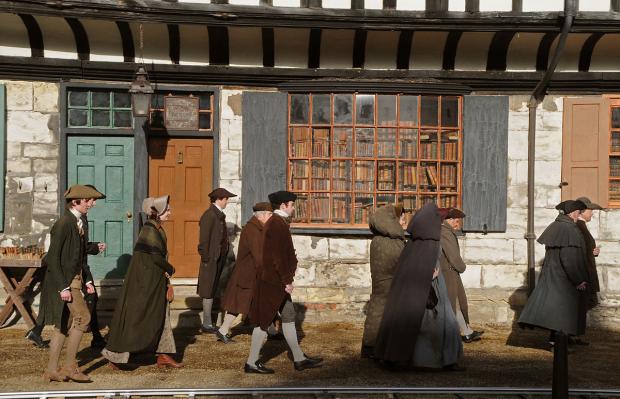
Excited enough about this news to drag my sorry butt over the computer and give it a blog post, I am happy to report that Jonathan Strange and Mr. Norrell will soon be coming to your sets as an adaptation! If you don't know the 2004 novel by Susanna Clark, you should. It is rich and beautifully written and incredibly long (1008 pages), combining a feel of scholarly exposition, with a deeply creative idea -- a Regency-era England, set at the Napoleonic wars, in which magic is possible, but in need of some restoration.


The production, which is said to be a 7 part tv miniseries, is currently filming in England, starring Bertie Carvel as Strage and Eddie Marsan as Norrell.


Its been a few years since I read the book, so I see that I now have some summer reading to do to get in shape for the airing! I suggest you do the same. Despite my best efforts, I cannot seem to lock down a planned air date either in the UK or America but which should be sometime this year (2014) on BBC or BBC America.

Friday, July 26, 2013

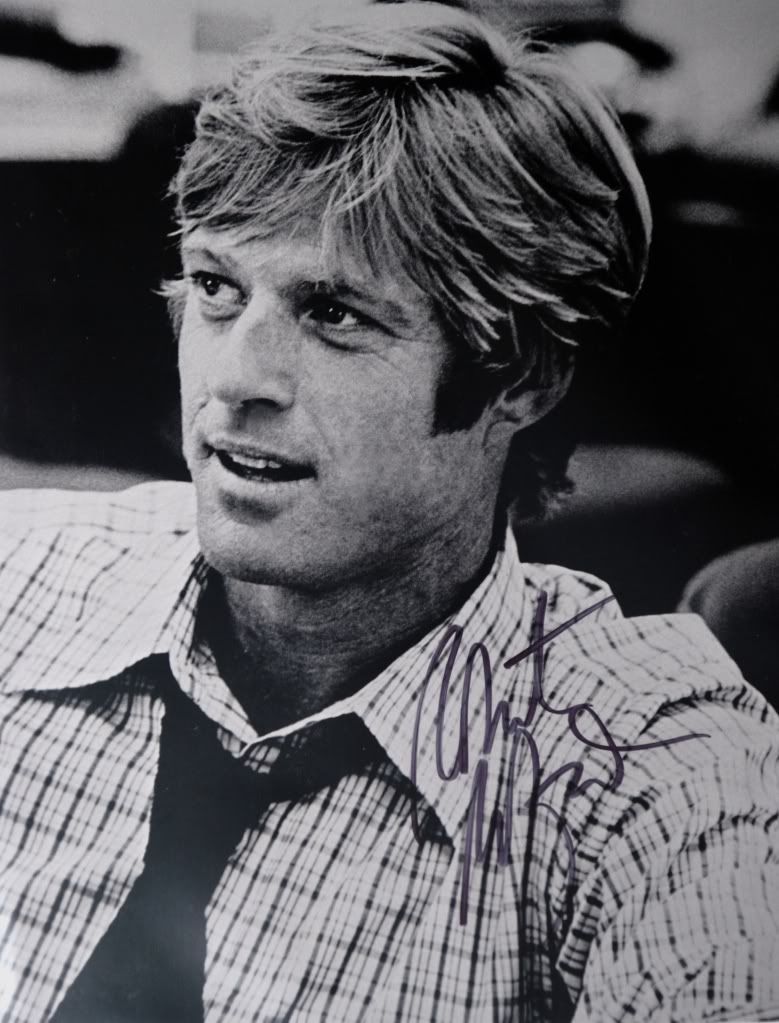
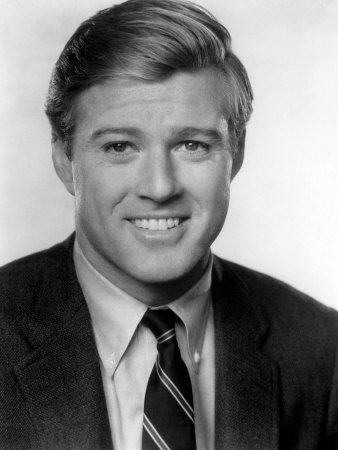
Thanks for the Tip, Brad Pitt and Robert Redford do Look Alike!

Besides simply being astonishingly handsome men, Brad and Bob are look-alikes.  There's a subtle similarity that may not hit you over the head, but can be seen all over their faces. The foreheads are equally high and square, with a similar hairline. Their eyebrows are alike in their straight heaviness.

And their eyes -- see how they both have a sort of squintiness to their lower lids. Sure, the noses are a bit different, but they both have the same a strong square jaw with barely there dimples and a similar shape to the mouth and teeth.

Way to go guys. You know just how to be gorgeous!


Thursday, June 13, 2013

More Crazy Look Alikes: Jimmy Stewart and Nicolas Cage

Has anyone else noticed this? Truth is, I didn't. My son recognized the similarity and tells me they look so much alike that he could hardly tell them apart, if it weren't for their different-era clothing.  I think they do look alike, but the real similarity is in some aspects of movement and gesture which are harder to see in stills. But take a look at these and see if you agree:

And look at this great earnest expression they share: 

Monday, January 28, 2013

Pride and Prejudice's Birthday

I understand that today is the 200th birthday of Pride and Prejudice, but unfortunately have been burning the candle at both ends and have absolutely no time or brain cells to come up with any pithy clever thoughts, top ten lists, charts of favorite characters or anything else remotely worthy of the occasion.

Yet I just could not consider myself a proper fan (which I really and truly am) if I didn't at least half-heartedly attempt to mark the date with a post.

This is that post.

Sorry to have wasted your time
;)