Showing posts with label Best Couples. Show all posts

Monday, November 7, 2011

Downton Abbey Finale: "If you're turning American on me, I'll go downstairs."

Exceeding all my wildest hopes and expectations, the final episode of Downton Abbey came ripping across my television screen.  With a powerful finish to the season that was sexy, dramatic, touching, and surprising, and which cast class gulfs into very sharp relief, it was as if the producers of this series set out to make my Downton dreams come true. (Not surprisingly, we also learn this week in the news that there will be a third series, so I am revving up for more Downton dreams already).
SPOILERS WARNING -- for Series (Season) 2 of Downton Abbey, Final Episode. Please beware and stop reading now if you don't want to know how things end.
Of the myriad aspects of the world of Granthams, perhaps the best and most continually interesting is the interplay of class on class. In this last episode, several story lines dealt head on with the shattering of social barriers after WWI.

And none did it better than the storyline of maid Ethel's "bastard" baby. Would she give her fatherless baby to the dead man's parents to raise in the upper reaches of society? This could be a hard story to sell to a modern audience which would understandably be thinking: "of course that baby should stay with its mother." But Downton Abbey does a great job of making this seem like the dilemma it would most certainly have been. The benefits to that child of being raised with money, position and name -- versus living in poverty with an unwed mother in 1919 or 1920 are substantial beyond our ability to really imagine. It appears by the end of this episode that Ethel will keep her child, citing the shocking idea that a child is best off with its mother.

Also dancing around class divisions, Sybil's continuing attachment to the chauffeur and desire to marry him is a show stopper early on.  The scene where Sybil declares to her family that she will marry Branson was extraordinarily done, full of wonderful acting. Even though by modern standards, this may not be earth-shattering stuff, Lord and Lady Grantham sell it as such. You can really feel the level of abomination that is felt by both the Granthams and by the people below stairs by this attachment. Mr. Carson's vehement: "have you no shame?" to Branson is tremendous. Neither side of the divide feels it easy or desirable to jump across that gulf.

I also really appreciate that here, Lord Grantham finally draws a line to his liberality. He is a character that continually surprises with his ability to be big and forgiving, respectful of subordinates, and open in his views, almost to the point that he doesn't feel real. He needed to take strong exception to Sybil's plans in order to be believable as an aristocrat. I'm glad he did. And when, for once, it is his American-born wife, Lady Grantham, who expresses a softer, more understanding sentiment toward her daughter, he has the great line: "If you're turning American on me, I'll go downstairs."

Speaking of great one-liners, the Dowager Countess Violet (Maggie Smith) can't be outdone and has a very nice one to Lady Edith who is moping about her sister's good luck in love and her own forlorn state. Says Violet: "Don't be defeatist dear; its very middle class."

Meanwhile, two of the most popular couples on the show: Mary & Matthew and Anna & Bates both have excitingly sexy moments.

Mary and Matthew share a dance, a declaration of feelings and even a kiss in a very romantic moment in a darkened downstairs hall. I'd forgotten how much I like the two of them together. It is all wonderful until Matthew's lovely fiance Lavinia spoils it by showing up and then later being noble about it all, and then later still, dying. (I knew someone would have to die of the Spanish flu and I am glad it wasn't Cora). It was right and proper for Lavinia to remove herself in this way, though this will not appear to make things any better for Matthew at present as he is now torn up by grief and guilt. We'll have to wait till next season to see if he can overcome those feelings before Mary marries the icky Richard.

Even better than Mary and Matthew kissing, has to be Bates and Anna getting married! This is almost too much; I couldn't have hoped for seeing that -- let alone seeing them together in a bed. Oh yeah. What? Bates being hauled away on a murder charge related to his ex-wife's suicide at the end. I'm OK with that. We certainly saw it coming and at least he got to have one night with Anna first....

This is the episode that just kept on giving. As if Mary & Matthew and Anna & Bates weren't enough, we get Lord Grantham and new maid Jane in some serious embraces -- are you kidding me! Can't believe they almost got down and dirty. They somehow make this cliche idea unbelievably touching. It doesn't feel like a cliche when it comes to Lord Grantham because he is so "not like that". Their scenes are hot and also very sad. Especially later as she tells him goodbye:
"Will you be happy?"
"I have no right to be unhappy. Which is almost the same."

So glad she left and they didn't get caught together. It can just be a slightly evil, but meaningful and tender relationship -- a moment of romantic excitement but not more. And am even more glad that all seems to be well again between he and Cora because they really are a great pair. LG deserves a bit of excitement; he's been such a great character this season, almost unseating Bates for the title of the unexpectedly appealing and surprisingly sexy heartthrob.

And to just bring everything round we have Thomas being helpful and obliging, and O'Brien being penitent -- though neither without ulterior motives I expect.

And by the end, Lord Grantham gives his blessing to Sybil and Branson, while Violet's words still ring in my ears:
"The aristocracy has not survived by its intransigence."

Tuesday, July 19, 2011

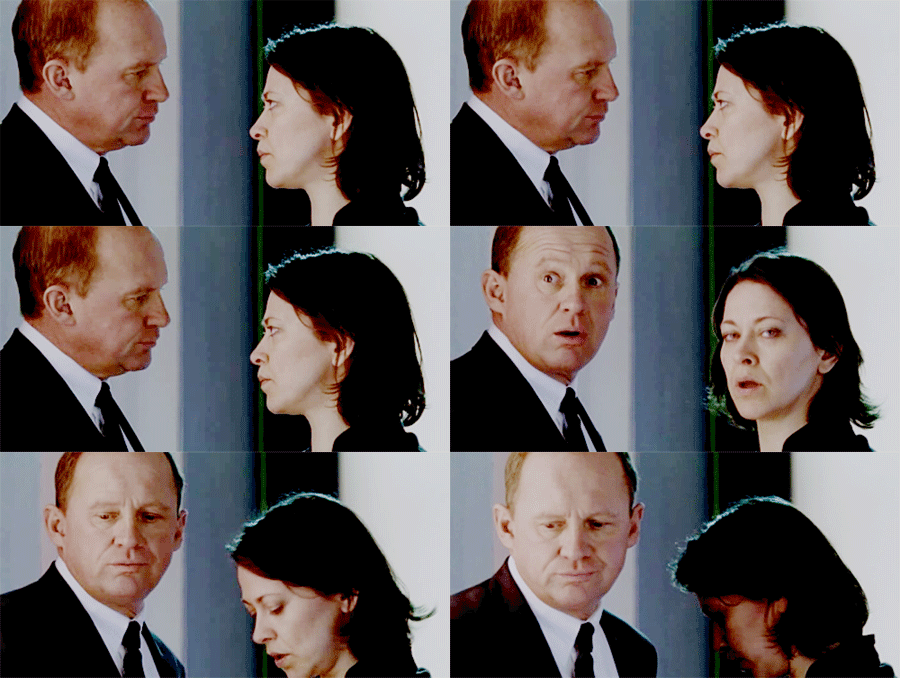
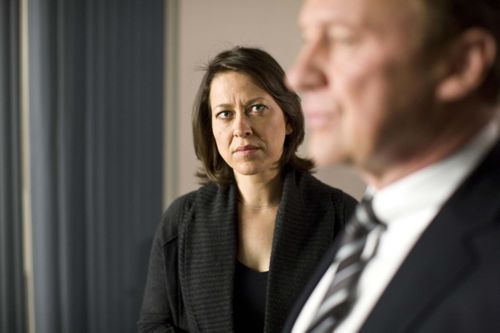
Harry and Ruth of Spooks (MI-5): Another of the Best Couples of All Time.

MI-5 (Spooks') Harry Pearce & Ruth Evershed are a wonderful couple. Neither of them is perfect but they represent something higher.  Not every one who is in love gets to be together happily. We all know this is true; many of us have lived this situation and know it intimately, but few do it with such class.   

Despite living with the frustration of a friendship that has (almost) caught fire again and again, they don't succumb to anger and pettiness. Despite their water under the bridge they focus on their jobs and they don’t usually have trouble doing what needs to be done despite their feelings. They are living that not-quite-realized love that in some ways is a more perfect one than that lived by those who focus on what is physical.

After Season 9, the viewer can still hope that something will happen for the two of them. I understand that the Spooks writers are giving hints that they are not done with this storyline and interesting things are in store for Season 10. So it is too early to give the post mortem, but as of now, Harry and Ruth have: made lots of eye contact, declared a variety of feelings, been through hellish circumstances together, and kissed, once. Harry has also proposed. (I find it beyond adorable and old fashioned that he has proposed to a woman who, as far as I know, he has never even slept with and may have only kissed once. Cheers, Harry!)

Their relationship caught my attention almost from the moment Ruth walked on screen in Season 2. It got to develop slowly and naturally. In early seasons of the show, I didn’t really like Harry that much – he comes on too strong; he’s a little haughty and arrogant and harder to “get.” Ruth is the humanizing aspect of the show. She breezes in almost clumsily looking and seeming out of place; she is easy to take for granted. We can see ourselves in her – she represents what a real human might do (albeit, a real human with superb intelligence) under the extraordinary pressure cooker of being a secret agent. She is the lens we get to look at the rest of the Spooks through as an every woman and slowly, her lens allows us to see and fall in love with Harry

Just as the writing and acting allowed the character of Harry to settle down a bit and feel more realized, very subtly, a slightly deeper relationship could start to be detected between Harry and Ruth. In an interview with Peter Firth, he said that the original impetus for the relationship came from him and Nicola Walker – the actors. He said they were flirting with each other on set and that bled over to them holding their glances a bit longer and exchanging a bit more meaning when they interacted as characters, and that the writers for the show picked up on it and began to develop it. 

I think that is really cool – kind of the way real relationships develop in that subtle and unplanned way in real life. How one brief, almost imperceptible moment can give the suggestion that another person is interested and how that interest can be the very thing that seems attractive; how, subtly, before you realize you are even aware of someone you realize you have a crush on them. This natural root to the relationship and its slow unfolding feel very real.

They have taken turns being more in love and too busy or distracted and somehow, as out of sync with each other and burdened by their jobs as they are, they never seem to devolve towards snippiness. They treat each other with respect and kindness. So (as of now) they get to live in love but apart; soul mates who may work together but not be together as lovers.

http://i957.photobucket.com/albums/ae52/LadyJSpooks/Harry-and-Ruth.gif 
The depth of this type of relationship is very sexy and is something that we don’t usually get to see portrayed on screen.  Peter Firth is not a gorgeous guy but he becomes extremely attractive as Harry – especially when he is near Ruth. These actors are middle aged. And neither has the kind of conventional beauty you usually see in Hollywood, but they both radiate great appeal and attractiveness on screen. And they become beautiful in the context of this pairing.

They are an all time great couple.

See also, Elizabeth Bennett and Mr. Darcy, the best couple of all time.

And if you liked this post, you might also like the Ultimate Spooks-Lovers Harry and Ruth Episode Guide or my homage to Sir Harry: The Strange Mystique of Harry Pearce. I Worship His SirShip

"MI-5's Harry and Ruth: Another of the Best Couples of All Time." LostinBritishTV 

Sunday, July 17, 2011

Harry Potter and the Deathly Hallows is Excellent but the Ending is A Little Disappointing.

Just went to see Harry Potter and the Deathly Hallows, Part 2 yesterday. Overall I enjoyed it, but have to agree with my 12 year old's assessment: it was really good, but I was a little disappointed. Please take care about the SPOILERS that follow.

(By the way, after seeing the movie a second time, I added to my list of great things about the movie, in
The Five Best Things About Harry Potter and the Deathly Hallows)
 
The best things for me about the movie were: (1) the very cool performance of Matthew Lewis as Neville Longbottom. One of the high points of the last novel was the way Neville transformed and became a leader at Hogwarts. Lewis' performance was perfect - exactly what he needed to be and all the better for being unexpected from this, excuse me, but previously rather geeky kid. He looks great covered in blood. He's confident, excessively brave and loyal. Neville rocks.

(2)The performance of Alan Rickman as Snape. This is nothing new; he is always amazing, but in this final installment, he gets a chance to really show full dimensions to Snape -- everything we have been denied before -- and he does it perfectly. The scene where Snape is cradling Lily's body and mourning [yes, I know, not in the book], gives me shivers. One of the highlights of my reading the book had been the poignant friendship and sad unrequited love between Lily and Snape. I have been looking forward, for a long time, to seeing their relationship play out in vignettes in the pensieve. Although not really a "couple," Snape and Lily are one of the best couples ever and I wish there could have been even more time in the movie devoted to this story. I was so glad to enjoy the superior skill of Rickman to flesh out that relationship. I looked forward to this the most about the movie and I was not disappointed.

(3) The performance of Maggie Smith as Professor McGonagall. It was wonderful to see almost all the Hogwarts' Professors get at least a brief screen moment to reprise their roles. And was thrilled that Maggie Smith was able to show her powerful wizardry skill and duel with Snape. She makes a really cool badass. My only regret is that my favorite exchange in the book, between Harry and McGonagall was not included in the movie.

"We shall secure the school against He Who Must Not Be Named while you search for this - this object."
"Is that possible."
"I think so," said Professor McGonagall dryly, "we teachers are rather good at magic, you know."

Being a great fan of the books, I always notice when the Potter movies depart from them. But I also completely understand this. I find it more interesting to think about why the writers and director may have made the choices they did (such as to eliminate the scene with the Carrows in Ravenclaw Tower or the absence of the house elves from the final battles) rather than nitpick about what they could have done better. It has to be incredibly hard to adapt a powerfully loved (and very long) book to the screen and they usually do a wonderful job of making difficult choices and making it work. But in this installment I was disappointed by the ending and its departure from the book in one key point.

As it is written, the final duel plays out between Harry and Voldemort in the great hall in a very public way -- with death eaters, professors, students, and members of the Order of the Phoenix all around. The movie chose to make this final duel more of a private confrontation between Voldemort and Harry. I think it was a mistake. One of the best parts of the book is when Harry starts calling Voldemort by his birth name after the horcruxes are destroyed and Harry knows he has the upper hand.

"You don't learn from your mistakes, Riddle, do you."
"You dare ---"
"Yes, I dare," said Harry. "I know things you don't know, Tom Riddle."

In this scene Harry takes a great liberty and gives a great insult. It needs to be public.

The point of this duel should be to establish how the wand lore mattered, to show publicly that "Tom" is now just a man - a mortal, and that he could be killed; it should establish, publicly, how Dumbledore died and it should vindicate Snape's memory.

Moreover, I think it was important for this scene to (for the sake of wizarding future) allow Harry's actions to unfold in front of witnesses so that no one holds Harry up as a demi-God, to let the community allow him be just a man too at the end of all this. The book's portrayal of that last final confrontation was already perfect. I regret that I wasn't able to see it filmed.

My younger son asked: "do you think anyone else will make a Harry Potter movie." So sad. He and I both felt robbed of the proper climax for this series. I'll have to read that section of the book aloud to establish its place back in our memories.


"Harry Potter and the Deathly Hallows is Excellent But the Ending is Disappointing."  LostinBritishTV

Tuesday, June 21, 2011

The Best Couple of All Time: Elizabeth Bennet and Fitzwilliam Darcy.

Elizabeth Bennett and Fitzwilliam Darcy, as portrayed by Jennifer Ehle and Colin Firth, are the clear winners of the "Best Couple of All Time" Award. It is not just the brilliant writing of Jane Austen that brings these characters to life so fully realized, but the stunning performances of Ehle and Firth, both separately and together, due to their wonderful chemistry, that make this the all around best relationship ever put on film.


It is a relationship characterized by struggle, sparring, and misunderstanding, but also charm, wit, attraction and teasing. It is an almost perfect tale of lovers at cross purposes but with the great sense and compassion to allow them to be together in the end. There are barriers to their love - but they are not absolute barriers; they are allowed to share complete unblemished happiness by the end.

I have never been as taken with a book as I was with Pride and Prejudice when I first read it. I had heard of the book of course, but for some reason didn't know it. I thought of it like Crime and Punishment or War and Peace, some deep difficult tome that I should attack some day. Lucky for me, one day while browsing in the used book store I took the time to pick up a copy and read the back cover. I found that I was utterly mistaken about the topic and bought it immediately.

Having never read a work from that era, I found the style of writing fascinating and alien. Although Austen wrote in prose that was markedly different from modern English, I found it easy on the eye and not too complicated to follow. Her language simply flowed off the page and felt effortless. While some words and phases like "chase in four" and "Michaelmas" made no sense to me at first, the book was so immediately humorous and lighthearted that I sunk in instantly. It was an intelligent read, but not laborious. I remember noticing how quickly it was going by and started to budget myself, allowing myself only 20 pages at a sitting in order to make it last. But alas it ended. At which point I probably read it again right away. 

Part of the charm of Pride and Prejudice is that which is found in all of Jane Austen's work. Her books are uniformly enjoyable for her use of language, her wit, and her keen observations on humanity. I find her prose amazing, as in this description of Mr. Collins: "The stupidity with which he was favoured by nature must guard his courtship from any charm that could make a woman wish for its continuance." Wow. If there has ever been a better sentence written in the whole of the English language, I would like to see it. Her books are all full of such gems. However, not to take anything away from her other books, I think the love story in Pride and Prejudice is probably her best. 

Lizzy is an incredible heroine, with her vivacity and intelligence, approaching the world as a puzzle but doing so in an easy, natural manner.  "It was not in her nature, however, to increase her vexations by dwelling on them. She was confident of having performed her duty, and to fret over unavoidable evils, or augment them by anxiety, was no part of her disposition." She is one of the best loved women in literature and deservedly so. She is lovely, sharp, compassionate and in almost complete control of herself. This passage, as Elizabeth prepares to meet the great Lady Catherine de Burgh at her estate Rosings Park is one of my favorites. "Elizabeth's courage did not fail her. She had heard nothing of Lady Catherine that spoke her awful from any extraordinary talent or miraculous virtue, and the mere stateliness of money and rank she thought she could witness without trepidation." I thought of these words one day as I steeled myself to visit the home of a very wealthy friend of my son for a play date. I tried hard to witness their wealth without trepidation as Lizzy would have done. But I know that, as much as I wish I were Lizzy Bennett, I am not. She is the better woman.

The exchanges between her and Mr. Darcy, which we would now call "banter," are just gorgeous and so fine. Mr. Darcy's chief quality is being smart enough to understand her and brave enough to pursue her. Truly. How unlikely is that? The fact that a man of his wealth and station in life is able to fall so fully in love with a middle class country girl by page 38! The reader learns his feelings after an exchange at a small party where Darcy has asked Elizabeth if she didn't want to dance a reel. To this she replies that he must have wanted her to say "yes" so that he would have that excuse to "despise her taste." Instead, she insists that she does not want to dance a reel and that he should "despise me if you dare!" "Indeed I do  not dare," he replies and "Elizabeth, having rather expected to affront him, was amazed at his gallantry; but there was a mixture of sweetness and archness in her manner which made it difficult for her to affront anybody, and Darcy had never been so bewitched by any woman as he was by her. He really believed that were it not for the inferiority of her connections he should be in some danger."

And even though the inferiority of her connections is extraordinary, and he is obviously concerned about it, he is willing to forget and propose 100 pages later. We, the readers/viewers, have known this was abrewin' for most of the book, but Elizabeth, taken by surprise, skewers him in a brilliantly acted scene from both actors. It is a testament to her character that she rejects him here. How many of us could have done that?! Seriously. Colin Firth's acting rends my heart. But she is a terrific heroine and she will not be gotten that easily.

The story goes on and most of the complications that have knit themselves between our lovers are slowly unraveled and they are ready to be together. This beautiful scene portrays forgiveness, longing and absolute adoration and it is all done through their eyes. These two actors both have such an astonishing ability to communicate through expression alone. I have still never been able to find out who is actually doing the singing of Mozart's Voi Che Sepate, in this scene: if it is indeed Jennifer Ehle singing? It's wonderful. The song is evocative of a mood, as is the piece Miss Darcy plays -- full of tension and then resolution. Elizabeth's deft handling of Miss Bingley makes Darcy an absolute goner. Look at that look on his face after Elizabeth rescues his sister.


I could go on. We all know how they are on the verge of total happiness when Elizabeth's sister Lydia screws everything up by running away with Wickham. That must be resolved and our hero has to be taken down a notch or two. He has to really prove that her lowly screwed up connections mean nothing to him next to his undying unfathomable passion for her. 

And Elizabeth has to have her own exorcism of relative-issues in that great scene where she puts Lady Catherine in her place. It serves the purpose of allowing her to assert passionately and publicly that she would consider and probably accept a proposal from Mr. Darcy.

Of course she does just that and the two get to be together, happily forever. A beautiful story.


"The Best Couple of All Time: Elizabeth Bennet and Fitzwilliam Darcy." LostinBritishTV

Friday, June 10, 2011

It May Sound Crazy but Jane Eyre and the Sound of Music are a Lot Alike

Watching both movies within a short time of each other, and being deeply moved by both, I realized that the Sound of Music and Jane Eyre are a lot alike. Stick with me for a moment and give me a shot at this . . .  I think I'll convince you.


Both Jane Eyre and the Sound of Music feature a young, forthright, devout, honest and simple young woman. Early in their respective stories, each of our heroines lives in a group situation (a convent, Lowood School) that does not suit her depth of feeling or character nor fully appreciate what she has to offer the world.

In each, our heroine goes to the home of a wealthy and socially prominent older man to serve as governess. The hero in each is gruff and distant toward the child(ren) in his care and not fully able to be a loving parent figure. Both heroes are preoccupied with their own troubles (Captain Von Trap, with his grief over his dead first wife and the Nazi presence in his county; Mr. Rochester with the insanity of his first wife and the betrayal by his family into his hopeless situation). Our heroines enter these grand homes undaunted, despite their simple backgrounds, and are perfectly willing to directly speak their minds and express displeasure with the master of the house for how he is raising the child(ren) in his charge.

Both our heroes are immediately interested and attracted to their young governesses and see a glimpse of how life could be with a strong, earnest, caring, simple woman but they do not know how to express it or pursue it. Instead, each pursues a socially appropriate relationship with a woman who is elegant, beautiful and of a similar rank in society.  Socially sanctioned marriage to these women is openly talked of for our heroes and desired by their families/friends. However, the connections are not to be, as our heroes’ feelings forbid them. These attractive rivals are shallow and lack real understanding.

Meanwhile, both our heroines, despite believing *him* to be engaged to another woman, are finding a real home in the house of their hero. Each wishes to stay in this place that has become home and with these people who understand and appreciate her, even if she can’t be with the man she now desperately loves.

The unspoken romance between the master and governess in each story deepens and culminates with an exciting moment where the heroes explain that they are not going to marry the elegant woman, their feelings for the governess are declared, the governess becomes the happiest of women, and marriage is proposed. Both declarations happen in the evening, outside on the grounds of the house they share. 

Though this would be enough to complete a standard love story, in these two stories the romantic climax does not form the climax of the story. Each story continues with a more intense drama.

Here the plot similarities become less parallel, as the Sound of Music features a happy couple together confronting evil in the world and fleeing through the hills to be together and away from the Nazi’s pressures on the Captain. In Jane Eyre, the existence and madness of Mr. Rochester’s first wife is disclosed and Jane flees; her hero languishes. Not until the end are they reunited.

Both stories feature our heroine leaving at some point in the story in order to distance herself from strong and disagreeable feelings; both stories feature a spiritual and emotional growth of the young heroine that allows each to be with the man she wants.  In the Sound of Music, this happens after she begins to feel attracted to him but knows him to be engaged to another and before the Captain’s declaration of love. In Jane Eyre, her leaving occurs after the declaration, on the very brink of marriage, after she learns of his wife still living.

Both stories also feature our hero needing to grow before he can be with the woman he loves. In the Sound of Music this was accomplished much earlier in the story and much more easily, as he became loving toward his children and re-invited music into their lives. In Jane Eyre, the hero’s growth does not take place until the end of the book after having suffered greatly.

Both stories end with the couple removed from their homes. The complexities of life cannot allow them to simply live happily ever after in the comfortable mansion in which they fell in love. But they can be together.


It May Sound Crazy but Jane Eyre and the Sound of Music are a Lot Alike. LostinBritishTV

Thursday, June 9, 2011

Downton Abbey's Anna & Bates and the Theory of Reality Fantasy

I have a new theory of fantasy. There are so many extraordinarily attractive people to be found in movies and on TV. These extraordinary people usually get to have exciting adventures, wear great clothes and hang out with other sexy people. For viewers, us regular folk, being attracted to purely fantasy people makes sense. They are perfect and gorgeous and fun to watch. They have lives we don't know or have and will never know or have and, honestly, don't even want to know or have. This is fantasy fantasy and it's nice, too.

But give me a choice between Brad Pitt and Brendan Coyle (Mr. Bates in the amazing television drama Downton Abbey), there is simply no contest. The winner is Mr. Bates. I know a lot of other people agree with me. Why is Mr. Bates and his touching relationship with Anna so deeply attractive?

Because of reality fantasy. Bates is someone we know -- or could know. He is flawed, interesting and compelling. He is both ordinary and extraordinary. His beauty is found partly on his face and partly in his character.  His face might not leap off the screen at you. It would be forgivable to not notice it at all and take him for just a regular person - a character actor. But blink, look again, and you'll see that he's fantasy normal. He is sort of every man, but he is so much better. Once you see it, it takes fire.

It radiates from the intelligent sparkle in his gaze. The depth of history and experience that lurks just below the surface. Oh, and maybe this only applies for Americans, but it resides in his to-die-for accent. It is found in his mischievousness mouth. The slight smile and beautiful curl to the lip line. He can talk. You can see that he can and will talk and say exactly what we want to hear - sometime. It resides in his broad, magnetic style. Once we stop to really see him, we know, instinctively, we want to get to know him better.  He works for a living. He walks with a limp. He is middle aged. He has a past. I don't know if I like him in spite of or because of these things.


Anna. Here is a woman who is beautiful on the surface and underneath. She is blond and young and pretty. But she is in a station in life where she might as well be anything else for all the good her charms will do her. She is past the first flower of youth. She works hard and is happy enough with her place but emptiness and longing are there as well. There is no real excitement in her life as she lives to work and serve. Yes, she is good -- through-and-through -- but she is not a simpery do-gooder. She is someone we like and would want to be friends with. She is someone we are, or have been.

But better.

Anna has spirit and consults her internal compass in deciding what is right or wrong. That internal compass allows her to: (1) drag a dead body from one part of the house to another in order to protect her mistress, (2) work to re-plant false evidence of theft in the room of Mr. Bates' foe after he tried to frame Bates, (3) open the corridor door between the male and female servants' halls when she was forbidden to do so, (4) seek out and conference with Bates' mother behind his back to try and clear his name, (5) cover up for her roommate when said roommate sneaks off for the day. Anna is forthright and unapologetic.

So, here is this lovely, grownup, lonely woman serving others in the house where she will likely live for a long time. The only men in her world are the completely out of reach aristocratic visitors and the servants like Thomas (the gay rogue), William (the shy, green, boy) and Carson (the much older butler). Almost from the moment she smiles a friendly welcome to Bates, we can see that this man, even though damaged goods in many ways, is the best opportunity for her in a long time. Opportunity, that is, for real friendship, shared exasperation with the goings on, and intelligent and thoughtful conversation.

By the time we learn that he is smart, kind, thoughtful, proud and sweet, Anna is already head over heels for Bates. When he walks into the kitchens where she sits alone and says tongue in cheek: "alone at last", we see the effect on her face.

For his part, when Bates comes to Downton Abbey, he is a slightly beaten man. He is deeply thankful for his chance to work. This situation must work out and he has his eye on nothing else. He is not thinking of love or even friendship - just living. Getting through. Making this work. Anna is kind to him and he's glad enough of it, but he isn't thinking about her. He has stopped seeing himself as a man. His disability, his age, and his past which includes war and taking the rap for a crime he didn't do, have put him where many of us are - in a course to the finish with blinders on. Plodding through as best as we can with the challenges life puts in front of us.

However, it doesn't take long for her presence to work on him at a deeper level. Seeing Anna and talking to her, he cannot help but notice how pretty she is. Deep inside he remembers women -- what it meant to be with a woman and it feels good to remember. But his crippled leg puts him in his place. He knows he is an old broken man. Almost against his will Bates begins to want to be young and whole again. I think this is why he looks for the limp-corrector and goes through the ordeal of trying to fix himself. He wants to be complete and even attractive. (He doesn't know, like we do, how very attractive he already is). Although the limp-corrector episode concludes with the idea that Bates must be content with who he is, we're not sure that lesson fully hits home. Instead it is his main cross and carrying it is the thing keeping him from Anna. He believes he doesn't deserve her.

How many of us regular people have lived this story from one side or the other? How many have been trapped in something small longing for something big? Or, have been changed by something big so much to think we don't deserve something small?

Anna and Bates are sexy, compelling and beautiful together because they are the story of life.

Check out Downton Abbey on Masterpiece


Downton Abbey's Anna & Bates and the Theory of Reality Fantasy. LostinBritishTV