It is very challenging for the fan of the novel Mansfield Park to dip a toe into the world of its adaptations. They are uniformly unsatisfying. Austen's work generally lends itself so well to portrayal on screen, it is hard to say why exactly Mansfield Park has had such a rocky road to the screen. I know that it is not one of Austen's best loved works. It is her longest and features an interesting assemblage of characters in which our hero/heroine stand for a moral line. The themes of class stratification, understanding one's self, one's talent's, one's "place" may not translate well to a modern audience. But these themes play well for me, and I love the novel. I love its complexity and depth.
Were I to simply rank and pick my "favorite" of the three adaptations (a 1983 BBC miniseries, a 1999 theatrical release, and a 2007 TV movie ) there'd be an unquestionable winner, because only one of these adaptations does a proper job of actually adapting the book: the 1983 miniseries. The other two are seized with misguided attempts to spice up the story - make Fanny Price exciting, to make Sir Thomas evil, to focus on irrelevant details (the slave trade), or push the sexuality over the top.
In quick recap of how all the watching came about: I wanted a lengthy miniseries fill my evenings and reached for the 1983 Mansfield Park which I own on dvd. I knew what I was going to get because I've seen it many times before and I enjoyed it, but for some reason, on this viewing, I was distracted by the grating affectations many of the actors employ. I also noted with displeasure that the Edmund / Fanny story wrapped up really awkwardly. These dissatisfactions led me to reach out for more.
Because it had been many years since I'd watched the other productions, I could no longer remember details and was flying blind. So I rented the 1999 version online. I figured, well, it had Jonny Lee Miller. This would be a good place to start. I couldn't have been more wrong. It didn't take long to remember that this was the light-porn adaptation. There is a sex scene with nudity; there is a lesbian hint between Fanny and Mary Crawford; there are shocking drawings shown of slaves beating raped, beaten, hung. Um....seriously. They are adapting... ?Austen? Do they know what she writes about? Oddly, the 1999 production also chose to morph Fanny Price into more of a "Jane Austen" character, changing the feel of the story significantly. I thought I'd hit rock bottom with one of the worst Austen adaptations there is.
So I was glad I'd only rented, not bought, and went over to eBay and and bought the 2007 version on dvd thinking it'd be nice to have another MP in my collection. Oh my word! This version is hardly an adaptation of anything. It is so pared down as to be unrecognizable. The sexuality is rampant and brazen; Fanny is insipid; plot details are bastardized. Its a mess! I think it is actually a worse adaptation than the 1999 version (and that is truly saying something), if only because it has hacked away at the novel so severely. If 1999 is bad because of its interpretations being unacceptable, 2007 is bad because it is a sprint.., on the wrong course.
Nevertheless! interesting things have happened in the past when I have taken the time to dig into the portrayals one at a time and compare them. So, just as I have done previously with both the adaptations of Emma and of Persuasion, I will go role by role into the Mansfield Parks, grading each production on the performances/characterizations of the main roles, assigning "casting points" to them. At the end I calculate a CPA (casting points average) and choose a winner.
Here we go!
Fanny
As mentioned above, I found all of the Fannys unsuitable. Austen has crafted heroines with a range of personality types: the lively and intelligent, the sensitive and romantic, the girlish and misguided, the reserved and proper. Why is Fanny's moral everywoman so hard to hit the right note on?
I have often heard Fanny accused of being boring. Sure, she might not be sparkly, but her character still packs a wallop. Austen describes Fanny through the voice of Henry Crawford as he tells his sister that he wants to marry her. According to Henry, Fanny has grace and goodness, is gentle, modest, and sweet. She shows patient forbearance and has strong affections. She has a warm, gentle heart and an understanding beyond question. He describes her elegant mind, her good principles, her steadiness and regular conduct and integrity. To this, Henry's sister Mary replies that this praise is "scarcely beyond her merits." In other words, yep. Fanny is all that. She is also young, pretty, relaxed and content. in the full bloom of youth, as Austen would say.
I picture her character as somewhere between Anne Eliot and Elinor Dashwood in terms of her clarity about what is right. Since she comes from poverty, she doesn't have their same decorum or self-confidence. She doesn't always know how to act in company; but her motives and actions always come from the right place. She may be girlish in the line of Catherine Moreland, but with a naturally strong central core. It's extraordinary that she has all these qualities, given her neglect and removal from her family as a child. In fact, as I think of it, she's somewhat of a Harry Potter character: completely good, very aware of what is right, and willing to stand up for that at every turn. She is remarkable for what she manages to be, despite everything in her background.
None of these characterizations do her justice.
 1983 - Sylvestra Le Touzel conveys some qualities of Fanny Price. She evokes the diligent niece, the compliant cousin, the kind friend to the disenchanted (see, e.g., her treatment of poor Rushworth); she is the moral line in the sand. But isn't relaxed, warm and natural enough. Sylvestra has an interesting look. She is actually somewhat beautiful at times, but doesn't suggest Fanny's striking attractiveness that many other characters in the book are struck with. The portrayal is a bit too frumpy. She has an odd, exaggerated, affected acting style with stilted mannerisms and a flat, decided, cadence. She seems almost apoplectic at other times. She is memorable but she doesn't capture Austen's heroine. B
 1999 - Frances O'Connor is far too sparkly. She plays an interesting character, but that character isn't Fanny Price. It is some blend of Jane Austen herself and a new heroine written to confuse us. O'Connor is an appealing lead actress. She might make a great Austen heroine. Just not this one. Although this might not be through O'Connor's design or fault, this characterization of Fanny is far too outgoing, charming, intellectual, literary, and outspoken. Fanny doesn't need to be glossed up to be interesting. She would be interesting just as she is, if somebody would care to try doing that. B
 2007 - Billie Piper is a lovely actress, but her Fanny Price is too far afield from anything Austen intended. She pouts; she's uncouth and open-mouthed. She stands around staring in a childish way. Interestingly, this worked well for the younger actress who played Fanny as a child, but doesn't translate to what grown up Fanny should be. This Miss Price speaks without decorum or reserve; she is a tomboy, running around disheveled and demanding a dance outside when Sir Thomas proposes a ball. Seriously? Not. Fanny. B-
Edmund
2007 - Blake Ritson
 Warm, kind and introspective, Ritson strikes a good brotherly tone with Fanny. He comes across as both dignified and honorable with an appropriate affect and tone of voice. He is relaxed much of the time, but more importantly, appears to be in control, almost always. He uses anger well when anger is need. Unfortunately, at the end when he becomes rather giddy in love with Fanny it feels rather strained and out of character for our Edmund. A
1983 - Nicholas Farrell
 He hits a good blend of morality and charm. Though probably not quite enough charm. He is a good moral center and does a nice job of making us see Mary's faults; we don't get a lot of chemistry with Fanny, but we do get a tiny nice scene which feels like almost flirting with Fanny (in the carriage on the way to dinner). He is not as personally appealing as the other two and has some notable mannerisms that feel awkward, but generally, he personifies Edmund. This 1983 production wraps up abruptly with Fanny and Edmund getting together with no change in manner or shift in their relationship. (The opposite problem of the 2007 version.) I can't put this all on Farrell, but he can bear his share. B+
1999 - Johnny Lee Miller
He is a very handsome man and has the potential for great charm. They just aren't on full display here, where he's fairly forgettable. He seems earnest enough and a bit confused much of the time. In fact, he seems buffeted about without real endeavor and that is the opposite of what Edmund should stand for. He should be direct, sure of himself, honorable to a fault, and appealing enough personally to have 2 ladies fall in love with him. He succeeds well enough on that last one, but feels too changeable and weak to be a good Edmund. I don't like seeing JLM down here a the bottom of any list, but he just doesn't stand out as much as the other two. If you want to see him shine, go over to Emma where his is the definitive Mr. Knightly. But as Edmund: B
Mary Crawford
Mary Crawford is one of Austen's most interesting women. She is so appealing, attractive and intelligent, but ultimately stands for base amorality and ends the book in disgrace, shut out from the man she has come to love and the family and home to which she's become attached. She is often compared to Elizabeth Bennett for her sparking wit, but I think that's too simplistic. I do see Elizabeth's wit, intelligence and playfulness in Mary Crawford, but I also see the overt interest in social climbing, the ambition and inappropriate character of say Mrs, Elton. And, unlike either of these women, Crawford also possesses the well-bred surface elegance and manners of someone like Miss Bingley. This must be a juicy role and the actresses who portray her in these productions do a pretty nice job with it.
1999 - Embeth Davidtz
 She hits all the markers. She is quite elegant. Quite beautiful. And maybe just a touch too regal. She looks a bit like Jackie Smith-Wood who handled the role in 1983, and acts a good deal like her too -- but without the awkward edges. You get the feel for the slightly conniving, self-interested lens through which she views the world, while able to sell herself seamlessly at Mansfield Park. The production in which she acts is way too raw and places Mary in a bit of a sex tease scene with Fanny Price. Remarkably, Davidtz' performance manages to overcome that awkward bit and stay refined. A
1983 - Jackie Smith-Wood
Like many others in the 1983 production, she acts with too much consciousness and has an affected style. If she could have been just a bit more natural, she'd be spot on as a Mary Crawford who speaks readily and easily with charm and wit, has the right amount of baseness in her motivations. She and her brother as a team probably have the best chemistry as well, seeming very much like siblings. B+

2007 - Hayley Atwell
This lady looks like Cindy Crawford. She is very pretty. but, her Mary Crawford is too sharp, calculating, and coarser than she should be. Mary should be elegant, lovely, a true lady on the surface. Atwell gives an impression of a cold, strategizing player from the start. We don't have to dig deep to see her flaws; they are on full display. B
Henry Crawford
How are you supposed to pick! All three are reasonably good approximations of Henry, but two are fairly forgettable (Beattie and Nivola) and one (Burbage) has irritating, though memorable, affectations.
I'll give the edge to the memorable one.
1983 - Robert Burbage
 He is tightly curled, like his sister, with whom he shares a nice chemistry. He plays Henry well, showing the rakish side in the beginning, developing into an earnest young man who seems to really love Miss Price. He sees her -- her value, her character -- while others are blind and Burbage manages that memorably. Alas, he also acts with an over-the-top awareness. Unfortunately, he enunciates with emphasized diction and gives big meaningful nods to make his points. Could he have only tamed that tendency, he'd have not only been memorable, but truly enjoyable. B+
1999 - Alessandro Nivola is a lovely man no doubt. But his Henry Crawford is the emo version. He feels things deeply and appears quite earnest. But Henry should be a bit more stand-offish, a rake who keeps his true emotions hidden. He fools those around him, then begins to fall, in spite of his better plans and judgements, for Fanny Price. Nivola is too soft, appealing, and available to be a convincing Henry. B

2007 - Joseph Beattie
He plays a shaggy Crawford, less kempt than one might like to see. And he, like his sister, feels too modern, too relaxed, too self-aware. They both appear to be going in to Mansfield Park full of specific bad intent, rather than having their rakish and conniving tendencies slowly unfold as their undoing. It's an important distinction. Henry fails to excel here not really because of Beattie's performance so much as the production choices of the version he is in. He ends up being more detritus on the floor of this poor adaptation. B
Sir Thomas
 1983 - Bernard Hepton is the clear best. In fact he is the only one who I can stand watching. Where did these other productions get such a creepy take on Sir Thomas? I don't claim Hepton's Sir Thomas to be a marshmallow. He is a stern alpha male, clearly an authority figure with a great deal of austerity about him. He frightens Fanny and his daughters aren't attached to him. But this Sir Thomas is also caring toward his wife, forgiving of his sister-in-law, kind to fanny, (and even to Maria), he respects Edmund and shows reasonable frustration with Tom. He is a highlight of the production. A
2007 - Douglas Hodge
 I think the 2007 must have been heavily influenced by the 1999 movie's take on the sexuality and on the foulness of Sir Thomas. Hodge's Sir Thomas is not as creepy as Pinter's, but is still unsettling. There are overtones of inappropriateness in his interactions with his niece. He is just not an appropriate Sir Thomas. C+
 1999 - Harold Pinter
Violent, scary, and god only knows what that guy is up to in Antigua. Alongside Fanny, Sir Thomas has to be one of the most generally misinterpreted characters in this book. I get that he may be hard to understand and appreciate, but the creative team behind this 1999 production reached well outside a reasonable interpretion of Austen's work to get this dark and disturbing take on the patriarch of the clan. C-
Mrs Norris
1983 - Anna Massey
 According to IMDB, Massey was born in 1937, making her just 46 or so during this production. I would have argued that she was too old for Mrs. Norris, but in point of fact, the actress is probably a perfect age for the role. That she is played so stooped over may be why she seems older. I don't know if this is Massy's own posture? or an acting choice? In any case, other than my perception that she it a bit too old-seeming for the role, I think Massey's Norris is the gold standard. Very memorable. Irritable and oh so petty, she gives the right flavor of a controlling woman trying to keep life going in the direction it is "supposed" to. A-
2007 - Maggie O'Neill is also about 45 years old at the time of her performance here and she seems it. (As a good thing). She, and her sister Lady Bertram, in fact, both feel like a nice breath of fresh air. They have the right kind of energy. O'Neill seems a little more like a tough CEO than a frumpy aunt, but I like her acting choices. She does well with this role. It's just that I can see Massey in my head now when I read the book, not O'Neill. B+
 1999 - Sheila Gish was about 57 years old at the time of this role. This is not the sole reason I have her in last place. I just felt I should mention her age, since I spoke about it for the others. In any case, I would claim that 57 is a bit too old for Mrs. Norris. Still, a larger problem here is that Gish's turn as Norris isn't very memorable. I have vague impressions of more anger and cruelty than is strictly appropriate to the role. I'll give her a B.
Lady Bertram
1983 - Angela Pleasance
 I seriously LOVE this languid, half-asleep take on Lady Bertram. The problem is it is just soooo overdone. Had Pleasance scaled back her approach, and spoken with a bit more clarity and coherence sometimes, she'd have been amazing. Had she not taken a great idea so over the top, she could have gotten my highest mark. As it is, I'll keep her in first place for the acting choices, her obsession with her pug, her quiet girl-like voice, but just ding her a bit for not knowing when to stop. A-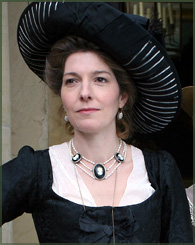
2007 - Jemma Redgrave is great. I really like her take on Lady Bertram. The problem is that this production has made her too purposeful, too aware. She is the one who engineers the over-the-top happy ending for Fanny and Edmund and -- although that can hardly be the actress' fault -- I can't like that choice of characterization. Had Jemma Redgrave had the good fortune to act in a MP with the ethos of the 1983 production, I'm sure she'd have knocked this out of the park. As it is, I'll give the portrayal of Lady Bertram in 2007 a B+

Thomas Bertram (eldest son)
1983 - Christopher Villiers

 The 1983 production, I have mentioned time and again, has numerous actors that go overboard with self-aware caricatures of their roles. One of the few in the production who emotes normally with no identifiably irritating "shtick" is Christopher Villiers as Tom. He gets one of the funniest lines in the miniseries and delivers it perfectly. When he and Edmund are arguing about the play and Tom suggests that it will be a distraction for his mother's nerves in light of Sir Thomas' absence, they look over to her just as she gives a snort and has clearly been sleeping. Tom smirks: "well, I was unlucky there!" He is not a major presence, but is so refreshing when he is on screen for his easy, natural, unaffected, manner. A
The other Toms are both forgettable. They look a bit alike as well, with these long pointy sideburns. So much so, that... this is embarrassing... I'm not entirely sure I have correct pictures here. I can at least remember D'Arcy, so I'll rank him next with a B.

Gosh this is unfair... even for me.
2007 - James D'Arcy
- fairly forgettable B
1999 - James Purefoy. Entirely forgettable B-
But that's the way it's going to be.
Maria Bertram
1983 - Samantha Bond
 Bond really manages Maria Bertram well. She has a refined attitude with enough of a twinkle to suggest that beneath the exterior, she is ... slightly wicked. She is cool. She is aware. She oozes a great mix of self-confidence and jealousy and a touch of naughtiness. And she does this with relish. Nice portrayal. A
1999 - Victoria Hamilton
 This is a brave actress to go en flagrante like this in an Austen adaptation. Her characterization of Maria is done pretty well, with a lot of heart. Despite the non-Regency handling of her attraction to Crawford, Hamilton infuses her Maria with a healthy dose of humanity. She has a yearning in her eyes. You can sense her lacking... and her longing ... and her sad (self-selected) fate of a life with a man she doesn't respect or love. You can find her foolish. You can hate her, but you understand her a bit better due to this nice performance. A-
2007 - Michelle Ryan
 This is a way over the top sexed-up take on Maria. She stares brazenly at Crawford and makes love to the camera. But in doing so, she gives a one-note performance. She is meant to be sexy as hell. She is sexy-as-hell. This is it. Maria is more. Whether we blame Ryan or (again) the creative forces behind the characterization, we come away with a performance that adds nothing to our understanding of Austen's character, though plenty of appreciation for her lovely face. B-
Julia Bertram

Julia is a fairly minor role and, in truth, I probably could have kept it out of this post. At one point I thought about ranking the sisters (Maria and Julia) as a set, but then I realized that I had different winners for each sister. So to be fair, I needed to split them up and grade them separately.
1999 - Justine Waddell
 There is something about Justine Waddell that needed to be rewarded. She is lovely, pleasant to look at; rather quiet, quite pretty, but somewhat benign. You see a sense of longing in her, and also a clear feeling that she is used to be in the background. Waddell has the right look for Julia and I think captures a really good younger sister vibe. Its not a big part, but the performance feels totally solid anyway. A
1983 - Liz Crowthers
 I find her a bit too snivelly for my taste. She is jealous more than confident. Pouty rather than lovely. She recedes into the background, though she appears in the adaptation that almost certainly gives Julia the most screen time. Crowthers is competent, just a bit of a disappointment B+
2007 - Catherine Steadman
I remember both the sisters in this productions primping, pouting, making goo goo eyes and sexing it up at least in the beginning. After that, I don't recall much of Julia's presence. Of course, part of Julia's role is to be a bit of background noise, but I'm not sure this portrayal of Julia contributes anything to our understanding, as Waddell's does. Steadman gets a B
Mr Rushworth
Rushworth strikes me as a pretty important character in this novel. He exists in a world where morality is the key variable. Fanny and Edmund standing for what is upright and moral, while others, particularly Maria, Mary and Henry push against what is right. There are splits between upright/proper traditional characters (Sir Thomas) and a more-relaxed style of living in the world (Fanny's mother and father, for instance.) A character like Rushworth is important because he falls outside of both of these dimension - neither as a paragon of morality or amorality, and not as a exemplar of what it means to hold up traditional values or those of fashionable society. He has a foot in a few different camps: he represents society, wealth, high-end living and also represents the insipidity of such factors being the standard upon which success is measured. Rushworth is great as comic relief and as a means by which almost every one gets to feel better about themselves.
 1999 - Hugh Bonneville manages to convey the complexity of all this background with his posture and face alone. He looks like a man who has grown up expecting a certain respect; he holds himself with great decorum, yet, his face looks confused and a little silly. He looks like he doesn't quite know what he is doing or why he is there. This is perfect. I wish the character had more screen time in this version, but Bonneville makes his little bit count. A
1983 - Jonathan Stephens is also very strong. He brings many of these same characteristics to the role, but brings a little something extra too: a slightly annoying over-the-top self-awareness. This, thankfully, is the last time I'll say it, but the 1983 production has no shortage of actors who over-emote. A little bit less can often be more. So, while Stephens' instincts on how to play this guy are spot-on, he hits us over the head with them. A-

2007 - Rory Kinear
Rushworth is a character these adaptations seem to have gotten the measure of pretty well. Kinear is good in this role; good enough an actor to make you long for more of his character. Unfortunately, you long in vain in this production, in which we are lucky to meet Rushworth at all. The way they sliced and diced through many of the less prominent roles, that is by no means a given. Kinear is appealing - dignified and a little silly. We just don't get nearly enough of him. A-
Whew! That's a lot of roles! Thats a lot of grades to assign! Let's get on with the calculation.
Here are the point values for each grade:
2007 1999 1983
A = 4.0 1 3 3
A- = 3.7 1 1 3
B+ = 3.3 2 4
B = 3.0 4 4 1
B- = 2.7 2 2
C+ = 2.3 1
C = 2.0
C- = 1.7 1
34 34.8 39.3 casting points total
3.09 3.16 3.57 casting points average
The winner overall, and I guess there's no surprise here, is 1983 with a very strong CPA of 3.57! Congratulations! 2007 and 1999 lag far behind but are so close to each other, and both manage solid B performances overall! 1999 just edges out 2007 for second place, with 3.16 CPA compared to 3.09.
Lots of things to note!
- each of the productions has at least one character who 'wins' the role. 2007 has the fewest wins with 1 -- just for Edmund. 1999 wins on 3 roles (Mary, Julia, and Mr. Rushworth) while 1983 wins the rest, 7 roles.
- the only role that scored in the "C" range was Sir Thomas! With two performances (1999 and 2007) earning C range marks
- 1983, though it does come away the winner here, it is not so much on its own shinning strengths as much as the others weaknesses. 1983 has more "B+" grades than either A's or A-'s and its the lowest scoring role was the "B" Fanny herself earned
- the best-acted role across all three productions was Mr. Rushwoth. All three adaptations turned in an "A"-range Rushworth
- 1999 has an interesting split. There are really good turns from Mary Crawford, Maria and Julia Bertram and Mr Rushworth in this version. It has as many A's (3) as the winning production (1983) does. But almost every other role in the 1999 version is in the B range, with the notable exception of Sir Thomas who is the worst characterization in the whole set
- the most often awarded score was a solid "B." I gave out 9! B's. Compare this to 7 A's, 5 A-'s, 6 B+'s, 4 B-'s and, as mentioned above, 2 scores in the C range (a C+ and a C-)


